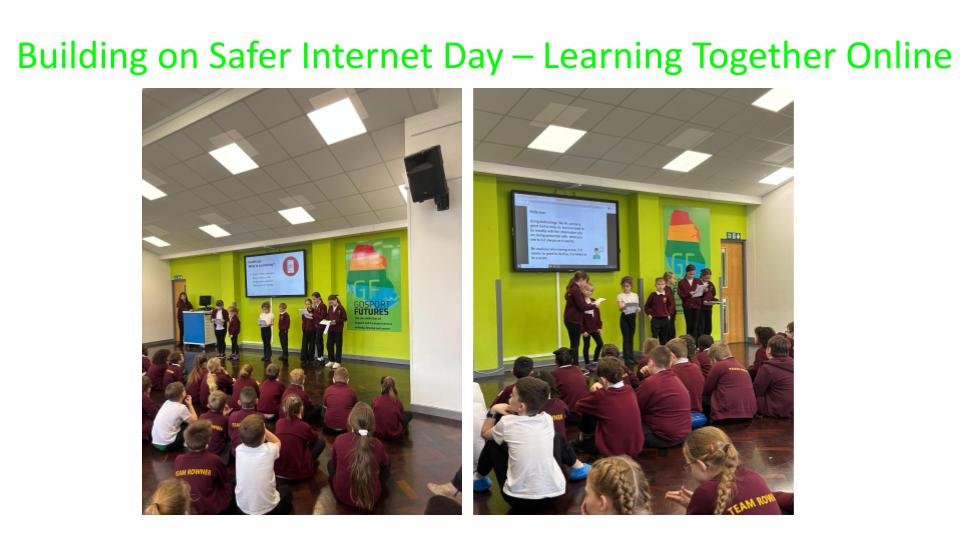
Today, our pupils took part in powerful live online sessions alongside KA Gomer and other schools from the King’s Academy Bay House Cluster, continuing our important work around online safety.
- Year 3 and Year 4 joined cluster schools for a shared session.
- Year 5 and Year 6 also met online together in a separate event.
We were delighted to welcome IT expert and former Police Officer Lee Hayward, who many of our parents will remember from the excellent workshop he delivered for families during the summer term. Lee reinforced clear and practical safeguarding messages in an engaging and age-appropriate way. Children were particularly struck by discussions around:
- How apps and platforms track what we look at and interact with, meaning technology can feel like it is “always watching”.
- The increasing difficulty in knowing what is real and what is AI-generated, including images, voices and videos.
- The impact of blue light from screens on sleep and wellbeing.
- Changes within platforms such as Roblox, and why privacy settings and age limits matter.
- Facial recognition technology and how personal data must be protected.
- The risks of online “friends” – reinforcing that real friends are people we genuinely know and see in real life.
One pupil explained that they had learned you can sometimes spot AI images by looking carefully at details such as hands and hair, as these are areas AI does not always generate accurately yet. Others were struck by how changes to games they actually play, including Roblox are linked to safety and age guidance. As one child reflected, they appreciated that the session focused on platforms that were genuinely relatable to them.
Sleep and screen use became a major talking point. Pupils learned that children need around ten hours of sleep for healthy development, and that screen time, particularly before bed, can disrupt this. Several pupils commented that they had not realised how important it was to avoid devices before sleeping and said they would try to change their habits. There was also discussion about how lack of sleep affects memory, with pupils understanding that when we do not rest properly, the brain struggles to store and recall information.
Age verification was another key area. One pupil thoughtfully noted that age limits are not simply there to stop children playing games, but to keep them safe. This marked a real shift in understanding.
Importantly, pupils valued that practical solutions were shared. Several commented that they appreciated being given clear steps to help protect themselves online and said they would now act on that advice.
Linking Back to Safer Internet Day – Tuesday 10 February
Today’s sessions built directly on our learning from Safer Internet Day on Tuesday 10 February, when we joined schools across the country in focusing on safe, smart and responsible use of Artificial Intelligence (AI).
We began that day with a whole-school assembly revisiting:
- The importance of age ratings for apps, games and films.
- Making sensible, age-appropriate choices online.
- Using technology with kindness and respect.
In class, pupils explored both the opportunities and risks of AI:
- AI and homework – Is it a helpful learning tool, or is using it to complete work for you dishonest?
- AI image filters – Fun between friends, but never acceptable without consent.
- AI and misinformation – How AI-generated content can spread false or harmful stories.
Pupils impressed us with their digital awareness and their understanding that technology is powerful, but must be used responsibly.
A Shared Responsibility
Online safety is not a one-day event. It is an ongoing conversation.Please take time to speak with your child about:
- What surprised them.
- The apps and games they currently use.
- Privacy settings and age guidance.
- Healthy screen habits, especially before bedtime.
Technology offers extraordinary opportunities. By working together, we can ensure our children navigate the digital world with confidence, caution and kindness.